

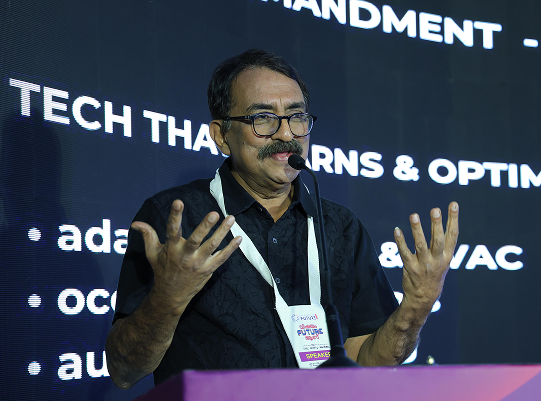
“The next generation shouldn’t inherit the Earth as mere property; they must take it to heart. We are bleeding this planet dry as if there’s no tomorrow—and I’m just as responsible as anyone else.”
With a gentle, knowing smile, visionary architect G. Shankar addressed a hall full of young faces, urging them to rethink what progress truly means. The Earth, he reminded them, is not just an asset to be used, but an inheritance that carries emotional and moral responsibility.
Drifting into memories of his childhood home, Shankar spoke of a time when houses breathed. “There was a natural coolness built into our homes. If you wanted air, you opened a door or a window,” he recalled. “Today, in Kerala—a land blessed with sun, wind, and rain—we can’t even fall asleep without switching on an air conditioner.”
His tone turned sombre as he referred to the recent tragedies in Wayanad, calling them the direct cost of “cutting into the very heart of the Earth” in the name of unchecked construction. “This isn’t rocket science,” he said. “Every disaster is a lesson. The real question is—are we willing to learn?” For him, the challenge before the youth is clear: to redefine what a Future Smart Home truly means.
Shankar believes the answer lies not in flashy gadgets or expensive technology, but in Kerala’s own architectural wisdom. Traditional homes, he said, were masterpieces of common sense—affordable, climate-responsive, and deeply respectful of the land they stood on.
As he concluded, he left the younger generation with a quiet but restless call to action: “Never stop asking ‘Why’. Keep asking until the answers find you.”
For More Details 7034044141
