

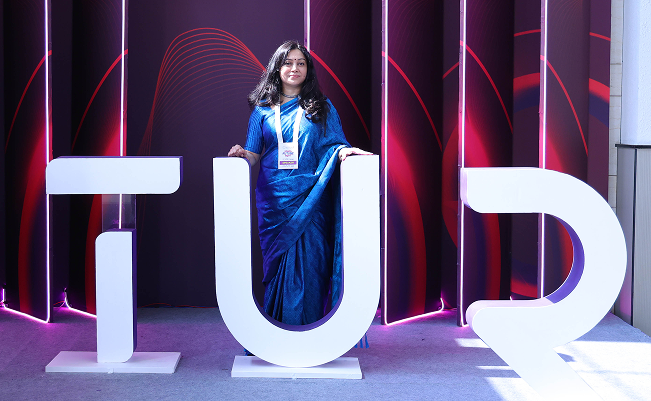
Kochi:Filmmaker Anjali Menon, speaking at the Summit of the Future, called for greater sensitivity, awareness and individuality in cinema and society. Addressing the session Storytelling and Cultural Change — On Screen and Off Screen, moderated by Prof. Venu Rajamony, she reflected on cinema’s responsibility, evolving audience dynamics and the need for creators to remain true to their inner voice.
Raising concerns around safety, censorship and creative freedom, Anjali stressed the importance of dignity in creative spaces. “No one pursuing a creative career should have to feel unsafe,” she said, adding that sensitivity, space for expression and awareness are essential for both cinema and social progress. Urging young creators to remain courageous, she said, “Listen to your own soul and go after your own voice.”
She questioned the industry’s growing obsession with opening-day box office figures, pointing out that many content-driven films, particularly those appealing to women audiences, grow steadily through word of mouth. Judging a film’s success within the first few days, she said, can be misleading.
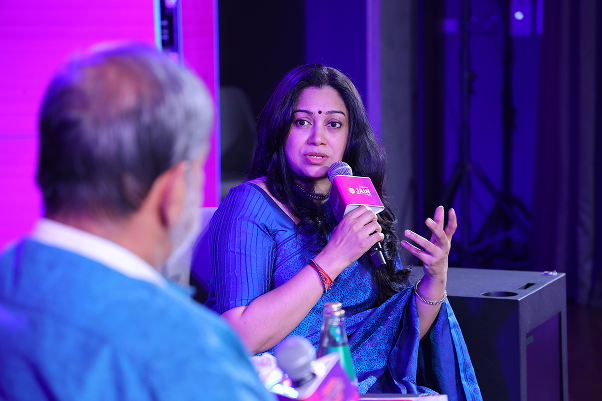
On violence in cinema, Anjali cautioned against placing the entire burden of social influence on films alone, noting that aggression exists across multiple public spaces today. While acknowledging arguments about the cathartic effect of violence, she expressed concern over its glorification and the repeated consumption of violent content.
At the same time, she warned against moral rigidity in filmmaking. Not all films, she said, need to function as moral lessons, emphasising that cinema is a creative medium. She called for shared responsibility between filmmakers and audiences in shaping viewing choices.
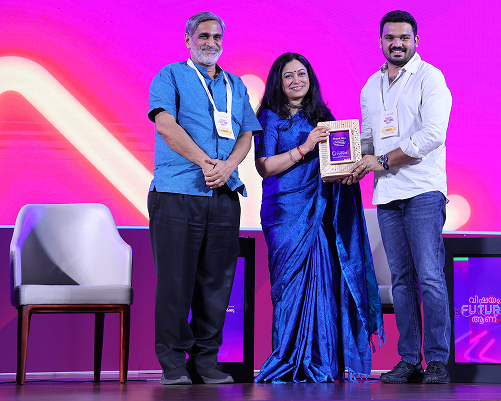
Reflecting on her own work, including Bangalore Days, Anjali noted that stories acquire new meanings as audiences age, with different generations interpreting relationships differently over time. She also spoke about emotional representation in cinema, observing that women are often portrayed as more expressive, while men tend to communicate emotions through action.
Highlighting a shift in audience behaviour, Anjali noted that women are increasingly making independent viewing choices and expressing their opinions openly, describing it as a positive and necessary change. On representation, she added that inclusivity should also consider age, as films today are increasingly shaped around younger audiences.
For More Details 7034044141
